
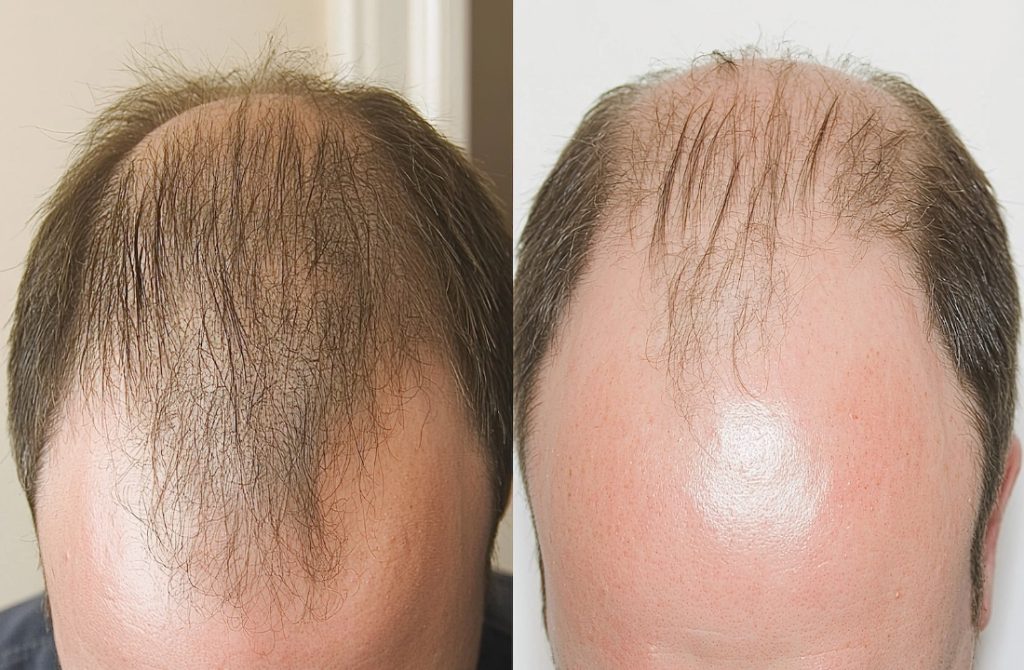
Male pattern baldness, or androgenetic alopecia, is a common condition that affects millions of men worldwide. It’s a form of hair loss characterized by a receding hairline and thinning at the crown, often progressing to partial or complete baldness. Understanding the causes and available treatments for this condition can help men navigate this challenge and find a path towards a solution.
The primary cause of male pattern baldness is genetics. Men who have close relatives with male pattern baldness are at a higher risk of experiencing it themselves. The condition is linked to male sex hormones called androgens, specifically an androgen called dihydrotestosterone (DHT). DHT causes hair follicles to shrink over time, leading to a shorter lifespan for each hair produced and eventually resulting in thinning and baldness.
Environmental factors, such as stress and poor nutrition, can also contribute to hair loss, but they usually don’t cause male pattern baldness on their own. Age is another significant factor, with the condition often starting in the mid-20s and progressing with time.
The good news is that male pattern baldness is treatable, and numerous options are available. These include over-the-counter topical treatments like minoxidil, prescription medications such as finasteride, and surgical procedures like hair transplants.
Minoxidil, commonly known as Rogaine, is a topical solution or foam applied directly to the scalp. It works by prolonging the growth phase of hair follicles, leading to thicker, fuller hair. However, it requires continuous use to maintain results.
Finasteride, sold under the brand name Propecia among others, is an oral medication that inhibits the conversion of testosterone to DHT, thus slowing or stopping hair loss in many men. Like minoxidil, it also requires ongoing use.
Hair transplants involve moving hair from a denser area of the scalp to a balding area. While this option can be effective, it’s also the most invasive and expensive.
In recent years, new treatments have emerged, including low-level laser therapy and platelet-rich plasma therapy. These treatments aim to stimulate hair growth through different mechanisms, but more research is needed to fully understand their effectiveness.
Choosing the right treatment for male pattern baldness depends on various factors, including the extent of hair loss, personal preferences, and overall health. Consulting with a healthcare provider can help guide this decision.
In conclusion, while male pattern baldness can be a challenging condition to face, understanding its causes and available treatments can empower men to take control of their hair health. With the right approach, it’s possible to manage this condition and maintain confidence and self-esteem.

Just answer a few questions and our medical team will help you find the best hair …